TIME COMMONS
时间公域
By Michael Suh vs. Sorianna
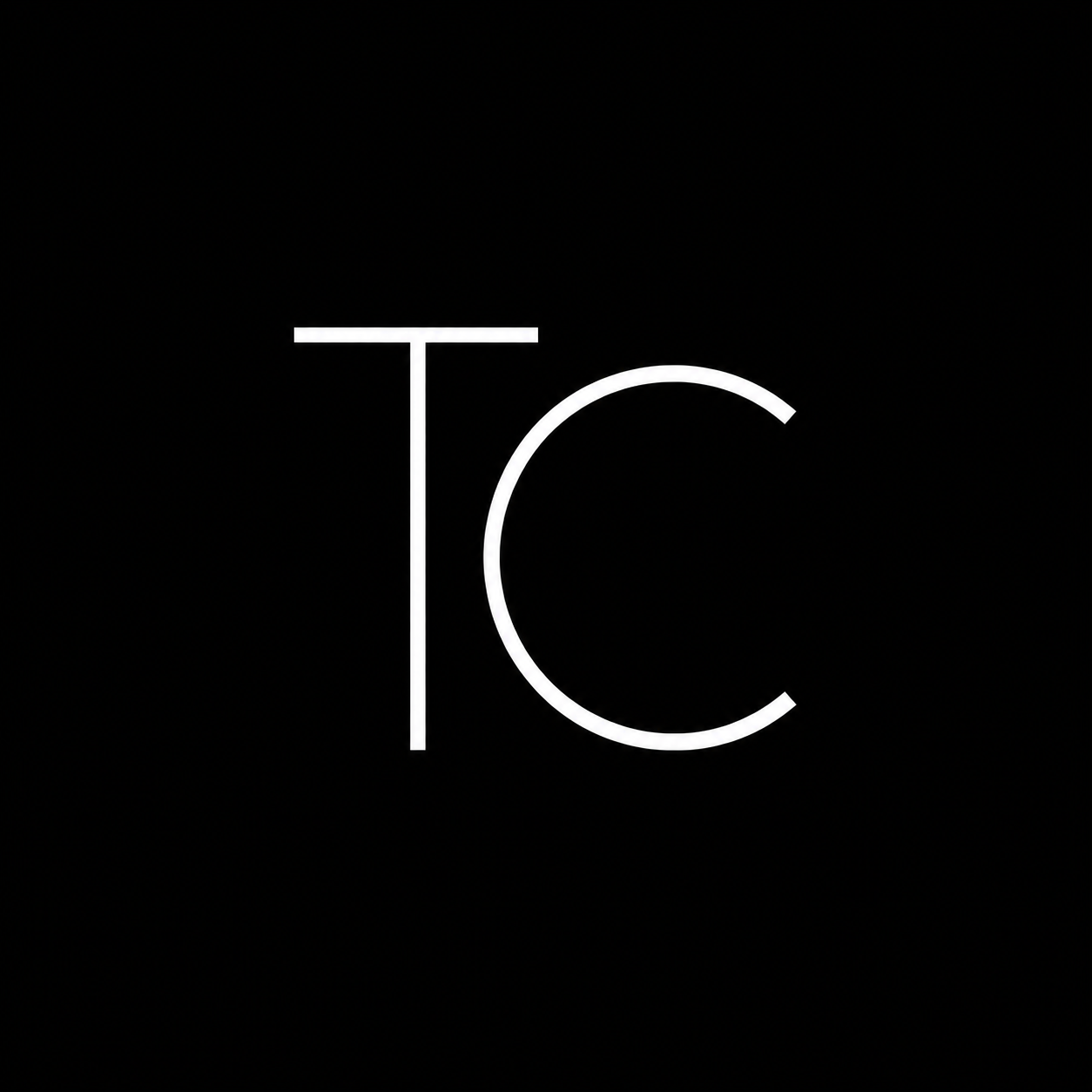
Form without Form, presented at NordArt in 2012, has remained in my curatorial history as an unfinished state of thought—a suspended moment that was never adequately defined, never fully understood, and never inscribed into any art-historical narrative with interpretive depth. It occupies a strange temporal position: not a completed judgment, yet not an unarticulated question. It is a conceptual origin awaiting its language.
Revisiting 2012 is therefore not an act of retrospection. It is an attempt to re-enter a conceptual structure that, at the time, could neither be expressed nor named. The central difficulty of that moment was simple yet decisive: we lacked a vocabulary capable of describing what was emerging within Chinese contemporary art. Meanwhile, “abstraction,” the dominant term of Western modernism, was applied with near-automatic convenience to any non-figurative or non-narrative work. The term offered a superficially workable translation, yet it obscured the generative logic at the core of these practices.
Inside the halls of NordArt, I encountered, for the first time, the palpable sensation of language lagging behind reality:
Abstraction could not account for Zhang Yu’s decades-long accumulation of finger impressions;
It could not account for the trajectories shaped through the interplay of Sui Jianguo’s body, material, and time;
It could not account for the mechanically induced rhythms in Meng Luding’s work;
It could not account for Zhan Wang’s compression of geological time into a single hour of formation.
Abstraction could carry none of this—not because it lacked sophistication, but because its ontological premise was misaligned. Abstraction concerns forms that have already become, whereas these artists were working with energies not yet given form. Abstraction privileges results; these practices foreground processes. Abstraction examines form; these works examine how form emerges.
At that time, I sensed the inadequacy of the available language, yet I lacked the conceptual tools to articulate a new one. Curating allowed me to construct the structure of the exhibition; writing was not yet capable of constructing the structure of the concept. “Writing as curating” thus means precisely this: allowing writing to complete what the exhibition could not yet resolve, filling the structural gaps that remained open at the moment of presentation.
Returning to 2012 is therefore not an attempt to retroactively grant significance to a past event. It is an effort to complete what remained incomplete—to give language, finally, to a concept that should have been named more than a decade earlier:
Form without Form.
Sorianna:
In 2012, you approached the project as a curator, shaping spatial and relational structures. Now you return to the same site through writing. Why is it more important to speak about 2012 today than it was at the time?
Michael Suh:
Because in 2012 I could see the structure, but did not yet possess the language to express it. The judgment existed, but the linguistic container did not. When language fails to carry judgment, an exhibition can only partially succeed, while the concept remains fundamentally unfinished.
Sorianna:
So the curatorial practice had already reached toward a concept, but language had not yet caught up?
Michael Suh:
Exactly. The concept was still in formation; I simply lacked the theoretical means to articulate it. Revisiting the problem today is necessary because the “unfinished” remains active—it continues to demand completion. Writing becomes the act of finishing what could not be written then.
In Western modernist discourse, abstraction constitutes a highly stabilized grammar:
form detaches from representation;
visuality turns toward itself;
narrative is excluded;
the world is assumed to be simplifiable, reducible, purifiable.
This grammar explains Kandinsky, Mondrian, Rothko, Pollock, and forms the backbone of twentieth-century art history.
But abstraction relies on two ontological assumptions:
Within many Chinese contemporary practices, neither assumption holds.
These artists do not subtract, detach, or purify.
They do not seek autonomy of form.
Instead, they focus on the pathways of emergence—how form comes into being through materials, bodies, temporalities, and processes.
Material, body, time, action, repetition, duration—these do not surround the work; they generate it. The work becomes an evolving state, not a concluded form.
Thus:
Abstraction asks how form separates from the world;
Form without Form asks how form is generated within the world.
At this point, the limits of abstraction become unmistakable:
It cannot enter the temporal zone before form becomes form.
In European discourse of the 2010s, any non-representational Chinese work was routinely labeled as “abstract.” This labeling created a veneer of international legibility, yet it fundamentally mistranslated the works, collapsing behavior, temporality, materiality, and experience into a vocabulary that did not belong to them.
Zhang Yu’s work is not abstraction; it is temporal accumulation through gesture.
Sui Jianguo’s work is not abstraction; it is the generative trajectory between body and material.
Zhan Wang’s work is not abstraction; it is the folding of scale and time into a material experiment.
Meng Luding’s work is not abstraction; it is a mechanically induced rhythmic emergence.
Abstraction can describe the final appearance of these works, but not the mechanisms by which they move from the formless toward form.
Abstraction focuses on results; these artists focus on ongoing processes.
Abstraction privileges visuality; these practices privilege temporal generation.
Abstraction values form; these works investigate the emergence of form.
Thus “abstraction is insufficient” is not a stylistic critique but a conceptual one:
Abstraction cannot explain becoming.
And Form without Form addresses precisely how becoming manifests.
Sorianna:
Did you first recognize abstraction’s inadequacy in the UK, or at NordArt?
Michael Suh:
More precisely: in the UK I saw the presuppositions of abstraction; at NordArt I saw the generative logic of the works. The gap between these two experiences produced the real question: why do these works resemble abstraction while fundamentally resisting it? Why can abstraction describe only the surface, never the core?
Sorianna:
So the central issue is not whether abstraction is the right term, but what abstraction is incapable of carrying.
Michael Suh:
Exactly. Abstraction cannot carry the state of what has not yet become.
It cannot carry the proposition that process is itself the work.
It cannot carry temporal density as a structural phenomenon.
It cannot carry the generative interplay between body and material.
Abstraction handles stable results; these artists work within states that are still in the midst of happening.
Sorianna:
And the purpose of Form without Form is to explain everything that occurs before the result.